E-LEARNING
E-learning, short for electronic learning, is an educational approach that utilizes electronic technologies and digital platforms to deliver instructional content and facilitate learning outside of traditional classroom settings.
Customar Service
customer services of E-Learning
Customer service in e-learning involves providing support and assistance to learners, instructors, and administrators to ensure a positive learning experience. Here's how customer service is typically handled in e-learning.
Tech Support
Tech support of E-Learning
Tech support in e-learning involves providing assistance and troubleshooting services to ensure the smooth functioning of the e-learning platform and the effective use of technology for learning purposes. Here's how tech support is typically provided in e-learning.
Insight
Insight of E-Learning
Insight in e-learning refers to the deep understanding, expertise, and strategic perspective that educators, instructional designers, and e-learning professionals bring to the development, implementation, and optimization of online learning experiences. Here's how insight is typically applied in e-learning.
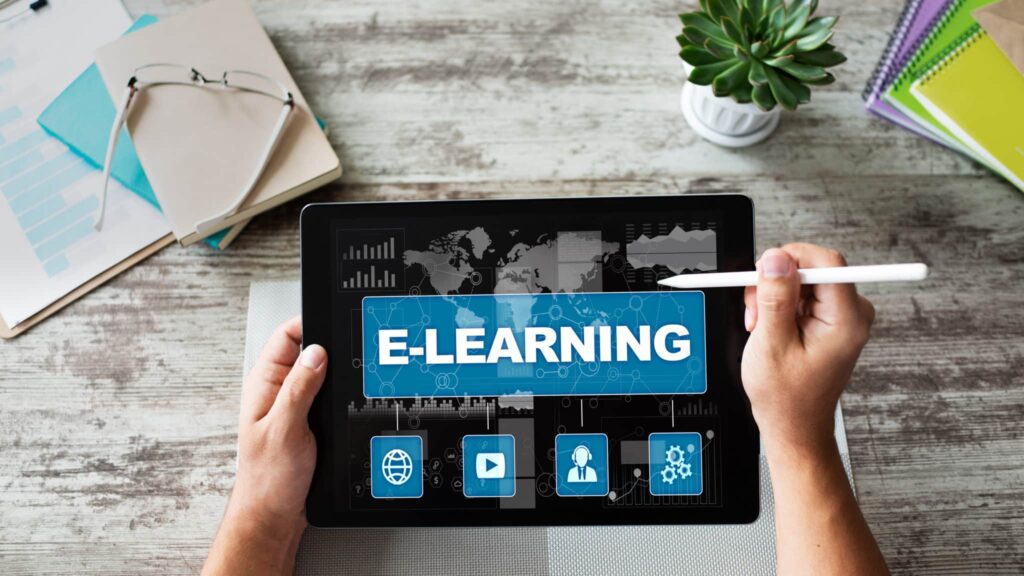
E-Learning
In today’s digital age, e-learning has emerged as a transformative force in education and training, revolutionizing the way we learn and acquire new skills. E-learning, short for electronic learning, leverages digital technologies and online platforms to deliver educational content and facilitate learning experiences that are flexible, accessible, and personalized. At its core, e-learning embodies the ethos of lifelong learning, empowering individuals of all ages and backgrounds to expand their knowledge, acquire new skills, and pursue their educational aspirations anytime, anywhere. Through the use of interactive multimedia content, online assessments, virtual classrooms, and collaborative learning tools, e-learning transcends the constraints of traditional classroom-based instruction, offering learners a dynamic and engaging educational experience.
FAQ's
Frequently ask questions.
“E-learning bridges the gap between knowledge and accessibility, empowering learners to thrive in the digital age.”
E-learning, short for electronic learning, refers to the use of digital technologies and online platforms to deliver educational content and facilitate learning outside of traditional classroom settings.
E-learning offers several advantages, including flexibility in scheduling, accessibility from anywhere with an internet connection, personalized learning experiences, cost-effectiveness, scalability, and the ability to accommodate diverse learning styles and abilities.
E-learning platforms offer a wide range of courses covering diverse subjects, including academic disciplines (e.g., mathematics, science, literature), professional development (e.g., project management, leadership, programming), vocational skills (e.g., graphic design, web development, digital marketing), and personal interests (e.g., photography, cooking, mindfulness).
Learners can access e-learning courses through online platforms, learning management systems (LMS), or educational websites. They typically sign up for an account, browse available courses, enroll in their chosen courses, and access course materials, lectures, and assignments through their web browser or mobile device.
Learning in e-learning is facilitated through a variety of methods, including video lectures, interactive multimedia content, discussion forums, quizzes, assignments, and assessments. Learners may also participate in live or recorded webinars, virtual classrooms, and collaborative projects with peers.